Serving Westfield, MA and surrounding areas. (413) 454-0027
Westfield Concrete
A new home, a major addition, or a failing old foundation - we handle the excavation, forming, waterproofing, and city inspection from start to finish so your structure stands on solid ground.
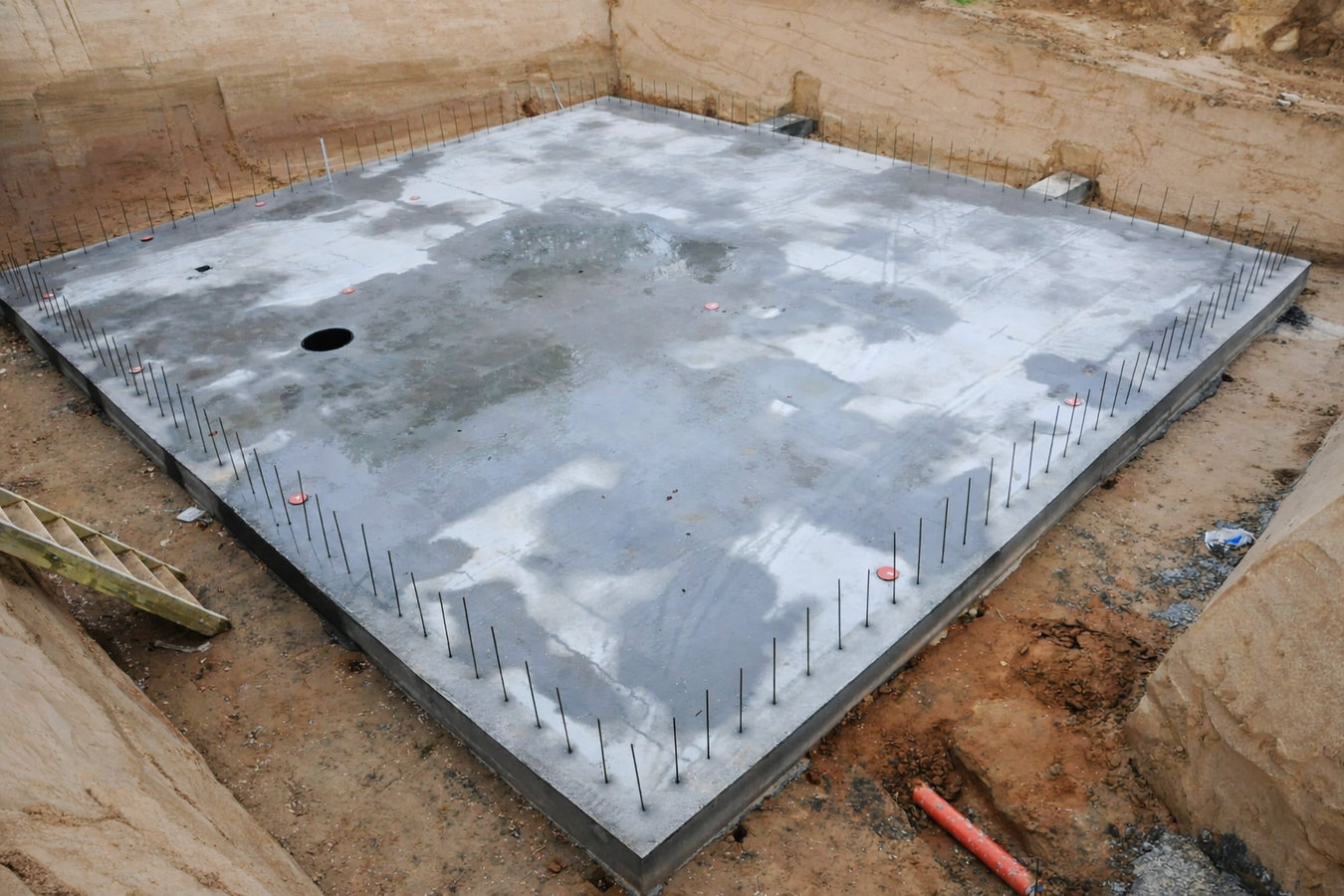
Foundation installation in Westfield involves excavating to below the 48-inch frost line, compacting a gravel base, placing steel reinforcement, pouring and curing the concrete, applying exterior waterproofing, and backfilling - most projects run two to four weeks from excavation to framing-ready.
Westfield is a city with a large share of mid-20th century homes, and a good portion of our foundation work here involves replacing foundations that have reached the end of their useful life rather than building on a bare lot. That means the house needs to be carefully supported while the old foundation comes out - a more complex job that not every concrete crew has done before.
If your project is a smaller addition or single-story outbuilding, a slab foundation may be a faster and less expensive path. We can help you figure out which approach is right during the site visit.
Diagonal cracks that are wider at one end than the other are one of the clearest signs of uneven foundation movement. In Westfield's older neighborhoods, this often traces back to a foundation that was not designed for the frost depth here, or one that has simply reached the end of its life.
When a foundation shifts, the house frame shifts with it. If a door that swung freely now drags, or a window that opened easily now sticks, the house is telling you something has moved. This is especially common after a hard freeze-thaw cycle in late winter or early spring.
Puddles or damp patches after spring snowmelt or heavy rain mean the foundation is not keeping water out. Westfield's wet springs and snowmelt from surrounding hills put real pressure on basement walls, and older foundations without modern waterproofing often cannot keep up.
Stand in your basement and look at the walls - they should be straight up and down. A wall that leans inward, even slightly, means the soil pressure outside is winning. This is more common in Westfield's clay-heavy soil areas where wet soil expands and pushes against the wall.
Our foundation work covers the full project lifecycle: site assessment and permit application with the Westfield Building Department, excavation to below the frost line, gravel base compaction, steel reinforcement placement, forming, the concrete pour, exterior waterproofing and drainage installation, backfill, and the final city inspection. We treat waterproofing as a core part of the job - not an optional add-on - because Pioneer Valley springs are wet and a foundation that leaks is a problem from day one.
Beyond full foundation installation, we also handle concrete parking lot building for commercial properties and slab foundation building for residential additions and smaller structures. If you are unsure which type of foundation work fits your project, a site visit will answer that question before any commitment is made.
Best for new Westfield construction where deep frost-line excavation is required anyway and usable below-grade space is a priority.
Best for homeowners who want to get the structure off the ground without the cost of a full basement, with proper moisture management built in.
Best for older Westfield homes with original stone or brick foundations that have deteriorated or no longer meet structural requirements.
Best for homeowners tying a new structure into an existing Westfield home, where matching the original footprint and connection points is critical.
The Connecticut River Valley was shaped by glaciers that left behind an unpredictable mix of sandy soils, clay deposits, and occasional buried boulders. Sandy soil drains well but can shift; clay holds water and expands when wet, putting real lateral pressure on foundation walls. Westfield also has a wet spring season, with snowmelt from the surrounding hills and the Westfield River watershed saturating the ground before the soil has fully thawed. A foundation installed without proper drainage and exterior waterproofing in this climate is not a matter of if it leaks - it is a matter of when. Homeowners in Springfield and Chicopee face the same seasonal pressures across the Pioneer Valley.
Westfield's residential neighborhoods also include a large number of homes built in the early-to-mid 20th century, many with original stone or brick foundations that are now at or past the end of their useful life. Replacing one of these foundations is more involved than new construction - the house has to be temporarily supported while the old structure is removed and the new one is poured. That is not work for a crew that has only done new builds. We have replaced original foundations in Westfield homes and know what the Westfield Building Department inspection process looks like at each stage of that kind of project.
We respond within one business day and schedule a visit to your property. Soil conditions and site access can change the price significantly, so we assess in person before giving you a written quote that breaks down every line item - no surprises when the invoice arrives.
Before any digging starts, we apply for the required permit through the Westfield Building Department. This step typically takes a few days to a couple of weeks. You should ask to see the permit before work begins - and we will have it ready.
We excavate to at least 48 inches below grade, set the gravel base, place steel reinforcement, and set the forms. The city building inspector visits before any concrete is poured to verify the setup meets code - this is the checkpoint that protects your investment.
After the pour and a few days of curing, we apply exterior waterproofing and install the drainage layer before backfilling. The city conducts a final inspection before the project is officially closed out. You leave with all permit and inspection documentation.
No commitment required. We visit your site, assess the soil, and give you a detailed quote before any work begins - so you can compare with confidence.
(413) 454-0027Every footing we place goes below Westfield's 48-inch frost line. That is not an option - it is the baseline for any foundation that is going to stay level through western Massachusetts winters. We confirm the depth in writing before any concrete is ordered.
The Pioneer Valley gets significant spring rainfall and snowmelt. We include exterior waterproofing and a perimeter drainage layer in our standard foundation scope because leaving them out is not a savings - it is a guarantee of future water problems. Massachusetts Home Builders Association supports best practices for waterproofing and moisture management in New England foundations.
Much of our foundation work in Westfield involves replacing original stone or brick foundations under homes that have stood for 80 or more years. The house must be carefully supported throughout. We have done this work locally and know how to protect your home during the process.
We handle the Westfield Building Department permit application and coordinate both inspections - before the pour and at final close-out. When the job is done, you have official documentation that the work was reviewed and approved by a city inspector.
The goal is simple: your home sits on a foundation that will last as long as the house above it. That means doing the prep work right, not cutting corners on depth or drainage to save a few days on the schedule.
Commercial-grade concrete lots and pads built to handle western Massachusetts freeze-thaw seasons.
Learn MoreSingle-pour slab foundations for additions, garages, and new builds throughout Westfield and Hampden County.
Learn MoreFrost season closes the concrete window fast - contact us now to lock in your project date before the schedule fills.